PM Mudra Loan Scheme 2026: PMMY is a flagship scheme launched by the Government of India on 8 April 2015 to provide financial support to small businesses, startups, entrepreneurs, shopkeepers, traders, service providers, and micro-enterprises. The primary objective of PM Mudra Yojana is to help individuals start or expand their businesses without facing difficulties in obtaining finance.
PM Mudra Loan Scheme 2026
| Particulars | Details PM Mudra Loan Scheme 2026 |
| Scheme Name | Pradhan Mantri Mudra Yojana (PM Mudra Loan Apply Online) |
| Launch Year | 2015 |
| Beneficiaries | Small Businesses & Entrepreneurs |
| Maximum Loan Amount | Up to ₹20 Lakh (selected categories) |
| Application Mode | Online & Offline |
Objectives of PM Mudra Loan Scheme 2026
PM Mudra Loan Apply Online The government introduced PM Mudra Yojana with the following objectives:
- Promote self-employment opportunities.
- Encourage entrepreneurship in rural and urban areas.
- Provide easy access to business finance.
- Support micro and small enterprises.
- Generate employment opportunities.
- Strengthen the MSME sector.
- Reduce dependence on informal money lenders.
Types of PM Mudra Loan Scheme 2026
Types of PM Mudra Loans
- PM Mudra Yojana offers different loan categories according to the stage of business growth.
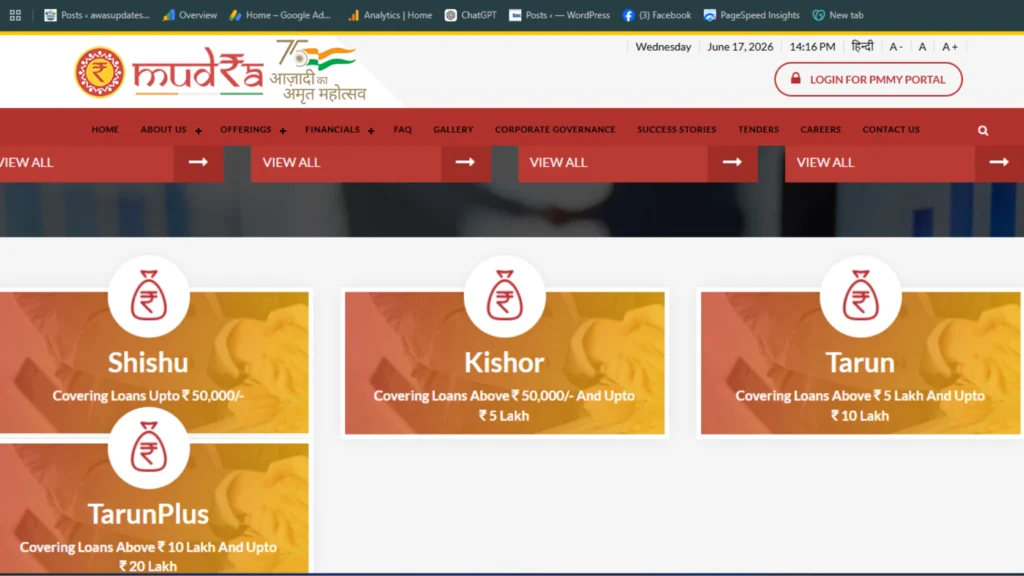
Shishu Loan
- This category is designed for new businesses and startups.
- Loan Amount: Up to ₹50,000
- Suitable for: Small startups and first-time entrepreneurs
Kishor Loan
- This category supports growing businesses.
- Loan Amount: ₹50,001 to ₹5 Lakh
- Suitable for: Existing businesses requiring expansion
Tarun Loan
- This category is intended for established businesses.
- Loan Amount: ₹5 Lakh to ₹10 Lakh
Tarun Plus Loan
- Loan Amount: ₹10 Lakh to ₹20 Lakh
- Suitable for: Well-established enterprises
PM Mudra Loan Scheme 2026 Eligibility Criteria
- Must be an Indian citizen.
- Age should generally be 18 years or above.
- Should operate a non-farm business activity.
- Business should be engaged in manufacturing, trading, services, or allied activities.
- Applicant should have a viable business plan.
PM Mudra Loan Apply Online Eligible applicants include
- Small business owners
- Shopkeepers
- Retail traders
- Service providers
- Artisans
- Food processing units
- Women entrepreneurs
- Startups
- Partnership firms
- Proprietorship firms
- Benefits of PM Mudra Loan Apply Online
Online Application Process
- Visit a participating bank or lending institution.
- Select the appropriate Mudra category.
- Complete the online application form.
- Upload required documents.
- Submit the application.
- Wait for verification and approval.
- Loan amount is credited after approval.
PM Mudra Loan Apply Online Offline Application Process
- Visit the nearest bank branch.
- Obtain the PM Mudra Loan application form.
- Fill in the required details.
- Attach all necessary documents.
- Submit the application.
- Complete verification formalities.
- Receive loan approval and disbursement.
PM Kisan Payment Status 2026: How to Check 23rd Installment and Beneficiary List
Who Can Benefit Most?
- Grocery stores
- Tailoring units
- Beauty salons
- Mobile repair shops
- Small manufacturers
- Transport businesses
- Food stalls and restaurants
- E-commerce sellers
- Freelancers
- Home-based businesses
- Common Reasons for Loan Rejection
PM Mudra Loan Apply Online Applicants should avoid:
- Incorrect information in application forms.
- Poor credit history.
- Incomplete documentation.
- Lack of business viability.
- Mismatch in financial records.
PM Mudra Loan Apply Online FAQs
What is the maximum loan amount under PM Mudra Yojana?
- Eligible applicants can receive loans up to ₹20 lakh under certain categories.
Is collateral required for PM Mudra Loan?
- No, Mudra loans are generally collateral-free.
Can women apply for PM Mudra Yojana?
- Yes, women entrepreneurs are eligible and encouraged to apply.
Can a startup apply for Mudra Loan?
- Yes, startups and new businesses can apply under the Shishu category.
Where can I apply for PM Mudra Loan?
- You can apply through banks, NBFCs, MFIs, Small Finance Banks, and Regional Rural Banks participating in the scheme.
Give me Lona
Parsal lion